Upgrading your SOLIDWORKS PDM environment to a newer version? The SOLIDWORKS PDM File Version Upgrade Tool is a critical tool designed to help you quickly and efficiently update your part, assembly, and drawing files to the latest version.
However, as with any tool, it’s essential to understand its benefits, limitations, and potential pitfalls before you begin. Here’s a breakdown of the good, the bad, and the ugly of using the upgrade utility.
The Good: What Makes Bulk Updating Worth It
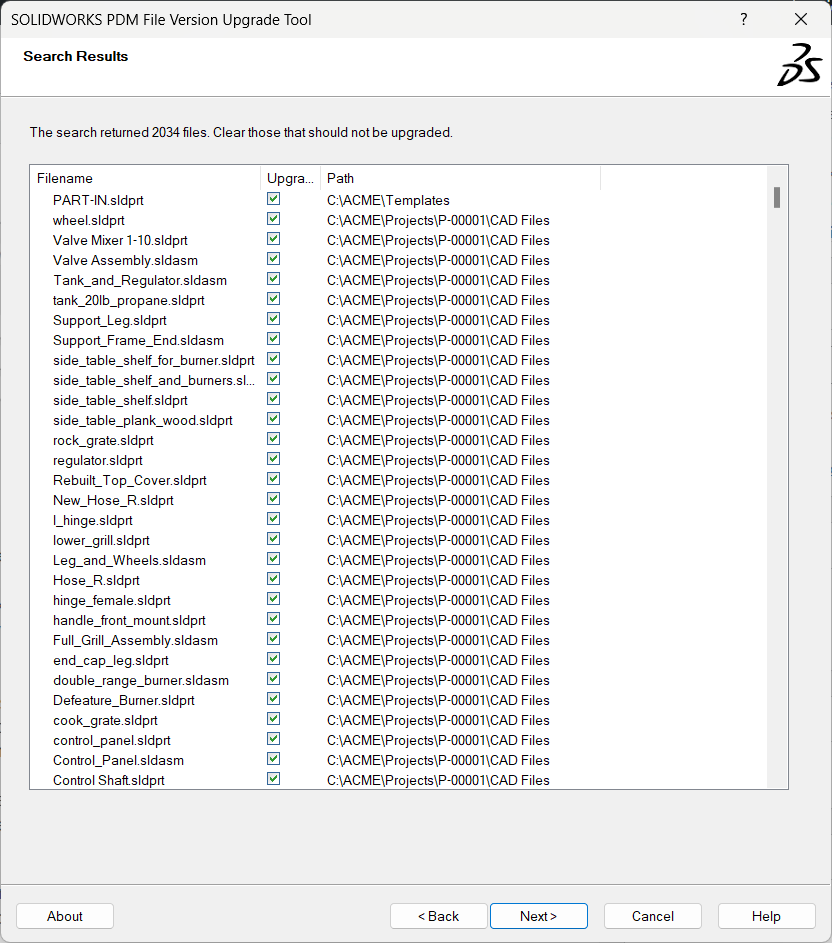
The SOLIDWORKS PDM File Version Upgrade Tool is a powerful automation tool that upgrades SOLIDWORKS parts, assemblies, and drawings stored in your SOLIDWORKS PDM vault to the latest version of SOLIDWORKS. It checks out, opens, saves, and checks files back into the vault while preserving critical metadata, such as revision tags, file references, and workflow states.
 Welcome screen for the SOLIDWORKS PDM File Version Upgrade Tool
Key advantages include:
- Automation: Eliminates the need for manual open and save operations.
- Reference Integrity: Retains parent-child relationships during upgrades.
- Distributed Processing: Supports multiple workstations running the upgrade concurrently using coordinator and agent workstations.
- Version Control Options: Let you either create new file versions or overwrite existing ones, depending on your team’s workflow needs.
The SOLIDWORKS PDM File Version Upgrade Tool is compatible with all currently supported versions, making it a future-friendly solution for maintaining data consistency.
The Bad: Things to Watch Out For
Despite its strengths, the SOLIDWORKS PDM File Version Upgrade Tool does have some limitations. Available system resources, version issues, or skipping the trial step can quickly affect what should be a smooth upgrade.

Setting up work file instructions for agent workstations
Be on the lookout for the following:
- Irreversible Upgrades: Once upgraded, files can’t be opened in older SOLIDWORKS versions.
- Selective File Support: Only .sldprt, .sldasm, and .slddrw files are supported for upgrade. Users must manually upgrade templates, blocks, and other SOLIDWORKS files.
- Hardware Demands: Each agent workstation involved must have enough RAM and disk space to open large assemblies. Underpowered machines may lead to failures.
- Trial Upgrade Required: Always perform a trial upgrade on a backup vault first to identify and address any unexpected issues that may arise.
The Ugly: When Things Go Sideways
If not carefully thought out, the upgrade process can break down dramatically. It is important to safeguard yourself from the following issues and make sure you maintain proper backups before starting.
Key considerations include:
- Upgrade interruptions: A power failure or network drop during an upgrade can require manual recovery.
- Cyclic References: Assemblies with circular references may not upgrade properly, especially when overwriting existing versions.
- Manual Recovery Steps: Rolling back an upgrade involves SQL queries, hex conversions, and manipulating archive folders.
- Backup Bloat: Overwriting versions creates a backup file for every item changed, which can overwhelm archive servers if space isn’t managed.
To mitigate these risks, the File Version Upgrade Tool includes recovery options and logs. However, even these require a knowledgeable administrator to effectively interpret and act on them.
Best Practices for Using the SOLIDWORKS PDM File Version Upgrade Tool
There are a few critical best practices before using the upgrade utility to ensure that transitioning from one version to another goes smoothly.

Version settings for the upgrade utility
Want to avoid the bad and ugly? Follow these best practices:
- Backup Everything: This includes both the file vault database and archive folders.
- Use a Trial Vault: Perform your first upgrade on a backup copy to identify errors before deploying it to production.
- Set up Work Instruction Files: Enable parallel upgrades by using a shared folder and defining coordinator and agent roles.
- Choose Version Settings Wisely: Create new version is safer; Overwrite existing is faster but riskier.
- Verify Results: Manually check the upgraded files and review the logs before deleting the backup files.
- Clean Up Afterwards: Locate and remove bak_ files from the archive server to reclaim disk space.
Expert Advice on a SOLIDWORKS PDM Upgrade
The SOLIDWORKS PDM File Version Upgrade Tool is indispensable for large-scale version updates in SOLIDWORKS PDM, but it’s not a set-it-and-forget-it solution. Understanding the tool’s structure, planning carefully, and executing upgrades with a disciplined strategy can save your team significant time and avoid costly setbacks.
While the steps are straightforward, there are always opportunities for issues to arise when performing a SOLIDWORKS PDM upgrade. That’s where Javelin’s SOLIDWORKS PDM Upgrade services come in. We take the stress and guesswork out of a vault upgrade by having our experts do the upgrades for you. With thousands of SOLIDWORKS PDM upgrades under our belts, we provide the fastest way to upgrade SOLIDWORKS PDM.
To learn more about our SOLIDWORKS PDM Upgrade Services, click here.
Cloud Software
law
4
Berita Olahraga
Lowongan Kerja
Berita Terkini
Berita Terbaru
Berita Teknologi
Seputar Teknologi
Berita Politik
Resep Masakan
Pendidikan


